Giant Sulphur Buckwheat
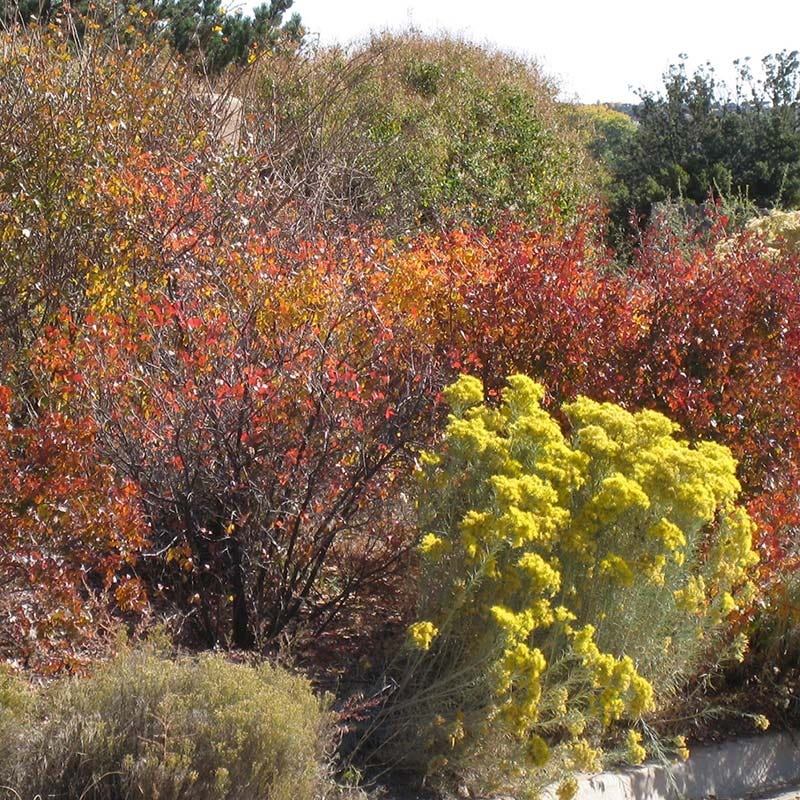
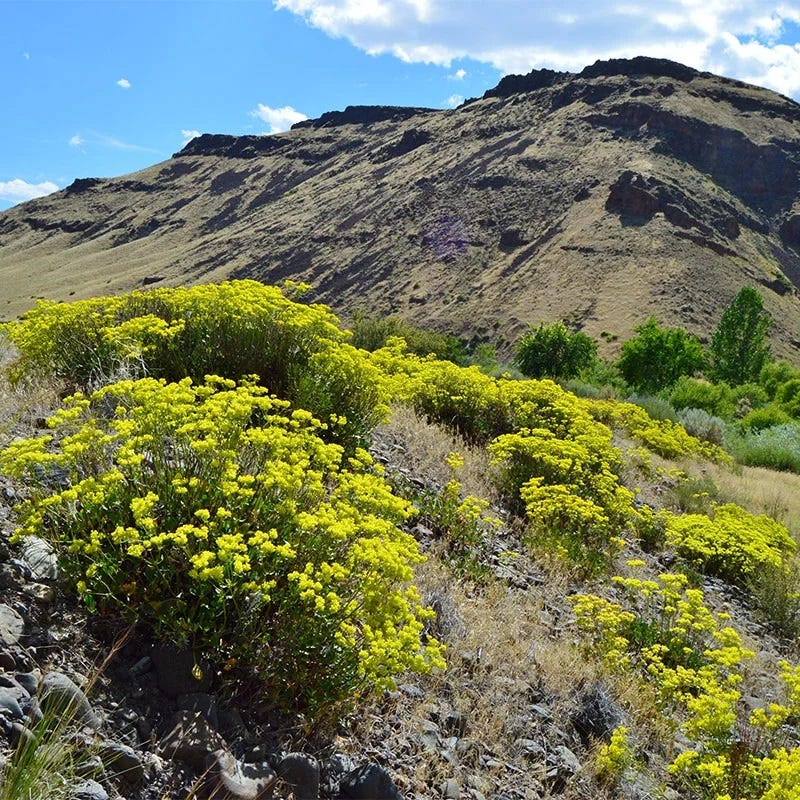
(18" tall x 36-40" wide) Native to the Great Basin of the western US, Giant Sulphur Buckwheat (Eriogonum umbellatum var. devestivum) is extremely xeric once established and will live for many decades when happy. A large growing shrubby sulphur buckwheat, this variety blooms in summer/early fall with bright yellow flower clusters. Like all Eriogonum, this variety is invaluable for habitat creation in the xeric landscape providing nectar for butterflies and native bees, food for beneficial insects, and nutritious seeds for songbirds and many other small animals. Good companion plants include Mirabilis (Wild Four O’Clock), Hesperaloe (Texas Red Yucca), Penstemon, and native Salvia (Sage).
(18" tall x 36-40" wide) Native to the Great Basin of the western US, Giant Sulphur Buckwheat (Eriogonum umbellatum var. devestivum) is extremely xeric once established and will live for many decades when happy. A large growing shrubby sulphur buckwheat, this variety blooms in summer/early fall with bright yellow flower clusters. Like all Eriogonum, this variety is invaluable for habitat creation in the xeric landscape providing nectar for butterflies and native bees, food for beneficial insects, and nutritious seeds for songbirds and many other small animals. Good companion plants include Mirabilis (Wild Four O’Clock), Hesperaloe (Texas Red Yucca), Penstemon, and native Salvia (Sage).
Original: $12.99
-65%$12.99
$4.55Description
(18" tall x 36-40" wide) Native to the Great Basin of the western US, Giant Sulphur Buckwheat (Eriogonum umbellatum var. devestivum) is extremely xeric once established and will live for many decades when happy. A large growing shrubby sulphur buckwheat, this variety blooms in summer/early fall with bright yellow flower clusters. Like all Eriogonum, this variety is invaluable for habitat creation in the xeric landscape providing nectar for butterflies and native bees, food for beneficial insects, and nutritious seeds for songbirds and many other small animals. Good companion plants include Mirabilis (Wild Four O’Clock), Hesperaloe (Texas Red Yucca), Penstemon, and native Salvia (Sage).