Sulphur-flower Buckwheat
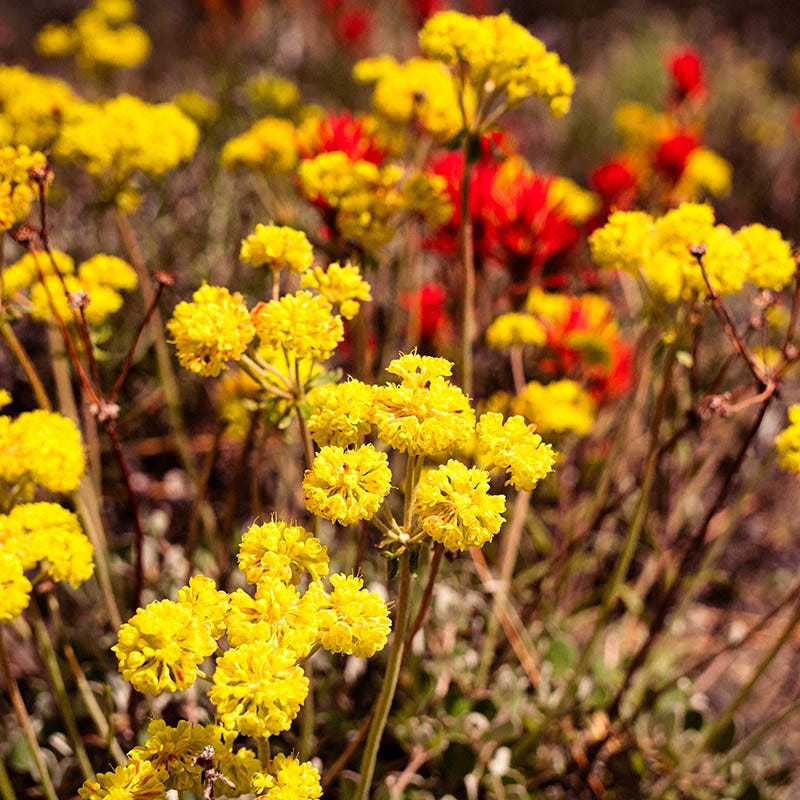
Eriogonum umbellatum (Sulphur-flower buckwheat) thrives in dry, rocky soils where other plants might hesitate. Native to western North America from southern Bristish Columbia to California, and east to Colorado, Montana, Wyoming, and New Mexico. With its vivid blooms perched atop wiry stems, it brings a burst of sunshine to high deserts, foothills, and alpine slopes alike. The flowers, which appear from late spring through summer, are not only eye-catching but also a magnet for pollinators—bees, butterflies, and other beneficial insects can’t seem to resist its charm.
This plant is a champion of waterwise gardening. Once established, it requires little to no irrigation. Its evergreen foliage, often tinged with red in cooler months, adds year-round interest and texture to garden beds. The yellow to cream blossoms dry to a rust red, lovely in dried flower arrangements. The seeds offer valuable food for birds and small wildlife.
Despite its delicate appearance, this buckwheat is built for survival. It tolerates poor soils, dry conditions, high elevations, and even a dusting of snow. The “sulphur” in its name refers to the bright yellow hue of its blossoms, not any unpleasant odor!
Eriogonum umbellatum is a delightful blend of beauty and grit—an ideal companion for gardeners looking to celebrate the spirit of the West.
Eriogonum umbellatum (Sulphur-flower buckwheat) thrives in dry, rocky soils where other plants might hesitate. Native to western North America from southern Bristish Columbia to California, and east to Colorado, Montana, Wyoming, and New Mexico. With its vivid blooms perched atop wiry stems, it brings a burst of sunshine to high deserts, foothills, and alpine slopes alike. The flowers, which appear from late spring through summer, are not only eye-catching but also a magnet for pollinators—bees, butterflies, and other beneficial insects can’t seem to resist its charm.
This plant is a champion of waterwise gardening. Once established, it requires little to no irrigation. Its evergreen foliage, often tinged with red in cooler months, adds year-round interest and texture to garden beds. The yellow to cream blossoms dry to a rust red, lovely in dried flower arrangements. The seeds offer valuable food for birds and small wildlife.
Despite its delicate appearance, this buckwheat is built for survival. It tolerates poor soils, dry conditions, high elevations, and even a dusting of snow. The “sulphur” in its name refers to the bright yellow hue of its blossoms, not any unpleasant odor!
Eriogonum umbellatum is a delightful blend of beauty and grit—an ideal companion for gardeners looking to celebrate the spirit of the West.
Description
Eriogonum umbellatum (Sulphur-flower buckwheat) thrives in dry, rocky soils where other plants might hesitate. Native to western North America from southern Bristish Columbia to California, and east to Colorado, Montana, Wyoming, and New Mexico. With its vivid blooms perched atop wiry stems, it brings a burst of sunshine to high deserts, foothills, and alpine slopes alike. The flowers, which appear from late spring through summer, are not only eye-catching but also a magnet for pollinators—bees, butterflies, and other beneficial insects can’t seem to resist its charm.
This plant is a champion of waterwise gardening. Once established, it requires little to no irrigation. Its evergreen foliage, often tinged with red in cooler months, adds year-round interest and texture to garden beds. The yellow to cream blossoms dry to a rust red, lovely in dried flower arrangements. The seeds offer valuable food for birds and small wildlife.
Despite its delicate appearance, this buckwheat is built for survival. It tolerates poor soils, dry conditions, high elevations, and even a dusting of snow. The “sulphur” in its name refers to the bright yellow hue of its blossoms, not any unpleasant odor!
Eriogonum umbellatum is a delightful blend of beauty and grit—an ideal companion for gardeners looking to celebrate the spirit of the West.