First Flush™ Lavender Candytuft (Iberis)
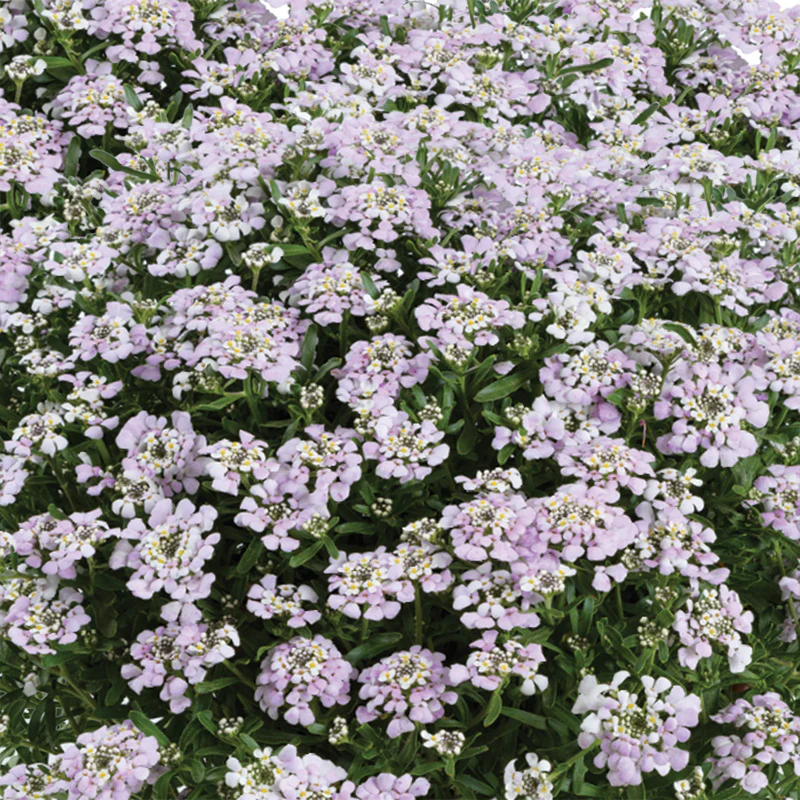
An improved form of the garden classic known as candytuft, Iberis sempervirens First Flush™ ‘Lavender’ Candytuft is a purple-blushed form of candytuft also bred for extended period of bloom. While many Candytuft plants flower for a few weeks mid-spring, this standout cultivar reblooms in summer thanks to superior heat tolerance. Fragrant clusters of flowers make this an important garden plant for pollinating insects, especially bees, butterflies, and beneficial pollinating flies. This evergreen perennial provides interest all year and is tolerant of dry soils. A superb choice for smaller flower beds, xeric parkway strips, and tough, part-shade spots under thirsty trees where an adaptable, long-blooming, and fragrant perennial is the ticket.
An improved form of the garden classic known as candytuft, Iberis sempervirens First Flush™ ‘Lavender’ Candytuft is a purple-blushed form of candytuft also bred for extended period of bloom. While many Candytuft plants flower for a few weeks mid-spring, this standout cultivar reblooms in summer thanks to superior heat tolerance. Fragrant clusters of flowers make this an important garden plant for pollinating insects, especially bees, butterflies, and beneficial pollinating flies. This evergreen perennial provides interest all year and is tolerant of dry soils. A superb choice for smaller flower beds, xeric parkway strips, and tough, part-shade spots under thirsty trees where an adaptable, long-blooming, and fragrant perennial is the ticket.
Description
An improved form of the garden classic known as candytuft, Iberis sempervirens First Flush™ ‘Lavender’ Candytuft is a purple-blushed form of candytuft also bred for extended period of bloom. While many Candytuft plants flower for a few weeks mid-spring, this standout cultivar reblooms in summer thanks to superior heat tolerance. Fragrant clusters of flowers make this an important garden plant for pollinating insects, especially bees, butterflies, and beneficial pollinating flies. This evergreen perennial provides interest all year and is tolerant of dry soils. A superb choice for smaller flower beds, xeric parkway strips, and tough, part-shade spots under thirsty trees where an adaptable, long-blooming, and fragrant perennial is the ticket.