🚚 Free Worldwide Shipping on All Orders!Shop Now

1 / 2
Wild Perennial Lupine
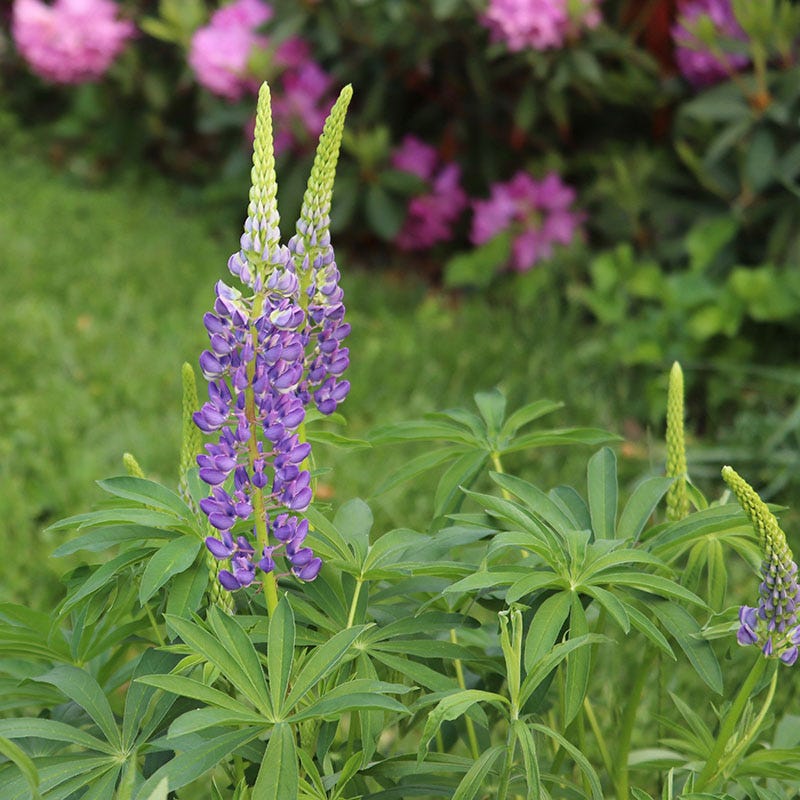
This showy native wildflower blooms in late spring with spikes of blue and bluish-purple flowers. Once common in nature, loss of habitat has greatly reduced the range of Wild Perennial Lupine (Lupinus perennis). This species must be planted in a sandy soil where it will pull nitrogen from the air and enrich the soil that surrounds it, and it can be challenging to establish in the garden. It’s beneficial to apply legume rhizobia inoculant (commonly used on many leguminous vegetables) to Lupine transplants to help establish them. The beautiful palm-shaped leaves are caterpillar food for many butterfly species, making it an excellent choice for pollinator and habitat gardens. Recommended companion plants include other species that thrive in sandy soil, like Coreopsis, Western Sunflower (Helianthus occidentalis), and Purple Love Grass (Eragrostis).
This showy native wildflower blooms in late spring with spikes of blue and bluish-purple flowers. Once common in nature, loss of habitat has greatly reduced the range of Wild Perennial Lupine (Lupinus perennis). This species must be planted in a sandy soil where it will pull nitrogen from the air and enrich the soil that surrounds it, and it can be challenging to establish in the garden. It’s beneficial to apply legume rhizobia inoculant (commonly used on many leguminous vegetables) to Lupine transplants to help establish them. The beautiful palm-shaped leaves are caterpillar food for many butterfly species, making it an excellent choice for pollinator and habitat gardens. Recommended companion plants include other species that thrive in sandy soil, like Coreopsis, Western Sunflower (Helianthus occidentalis), and Purple Love Grass (Eragrostis).
$4.90
Original: $13.99
-65%Wild Perennial Lupine—
$13.99
$4.90Description
This showy native wildflower blooms in late spring with spikes of blue and bluish-purple flowers. Once common in nature, loss of habitat has greatly reduced the range of Wild Perennial Lupine (Lupinus perennis). This species must be planted in a sandy soil where it will pull nitrogen from the air and enrich the soil that surrounds it, and it can be challenging to establish in the garden. It’s beneficial to apply legume rhizobia inoculant (commonly used on many leguminous vegetables) to Lupine transplants to help establish them. The beautiful palm-shaped leaves are caterpillar food for many butterfly species, making it an excellent choice for pollinator and habitat gardens. Recommended companion plants include other species that thrive in sandy soil, like Coreopsis, Western Sunflower (Helianthus occidentalis), and Purple Love Grass (Eragrostis).