Desert Peach (Prunus)
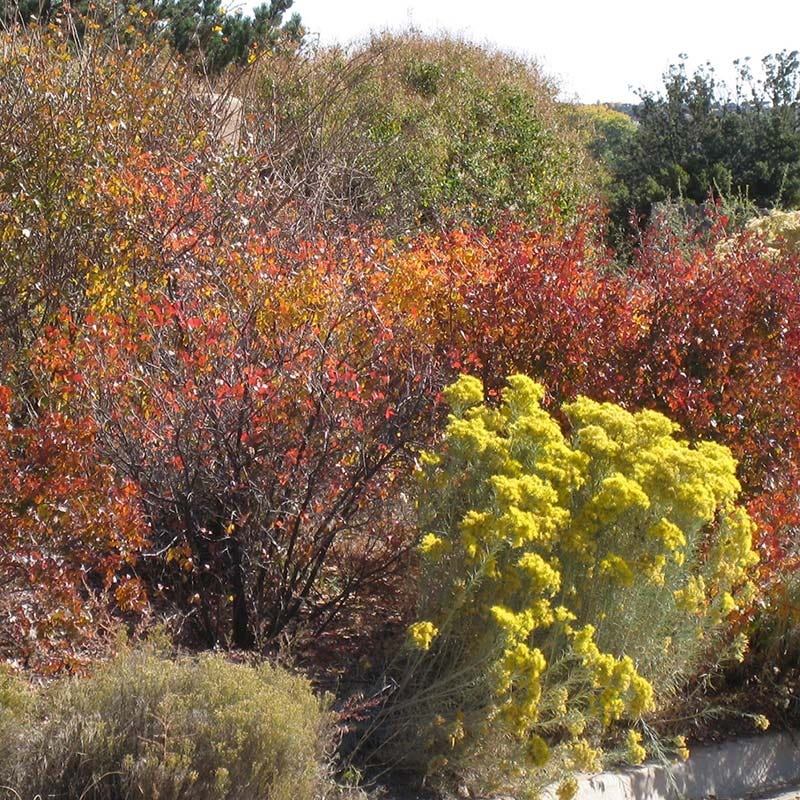
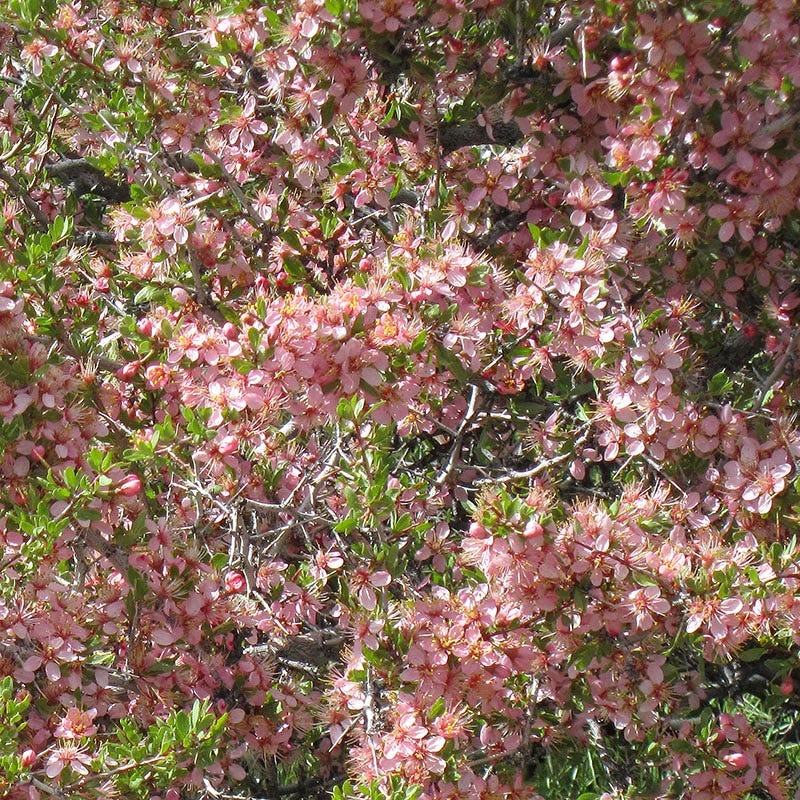
Blooming in mid-spring, the shrubby Desert Peach (Prunus andersonii) perfumes the garden. Its small pink flowers have five concave petals and whisker-like stamens, followed by a crop of fuzzy peaches, which have a heart-shaped seed in the center. Its native range includes eastern California and western Nevada, where it grows in the desert and mountains. This long-loved western native is rarely grown because of the difficulty of collecting its seed, but Chief Horticulturist David Salman has been Desert Peach for several decades in his Santa Fe gardens, where he collects the large seeds. It prefers sandy or decomposed granite soil, and careful attention to watering is needed to get the young plants established. But once comfortable, the shrub is long-lived and a wonderful addition to the xeric garden. Desert Peach is a host plant for a wide variety of butterflies and moths and provides habitat and food for birds and other pollinators. This plant is recommended for western gardens only. Companion plants include Apache Plume (Fallugia) and Sand Cherry (such as Prunus besseyi Pawnee Buttes®).
Blooming in mid-spring, the shrubby Desert Peach (Prunus andersonii) perfumes the garden. Its small pink flowers have five concave petals and whisker-like stamens, followed by a crop of fuzzy peaches, which have a heart-shaped seed in the center. Its native range includes eastern California and western Nevada, where it grows in the desert and mountains. This long-loved western native is rarely grown because of the difficulty of collecting its seed, but Chief Horticulturist David Salman has been Desert Peach for several decades in his Santa Fe gardens, where he collects the large seeds. It prefers sandy or decomposed granite soil, and careful attention to watering is needed to get the young plants established. But once comfortable, the shrub is long-lived and a wonderful addition to the xeric garden. Desert Peach is a host plant for a wide variety of butterflies and moths and provides habitat and food for birds and other pollinators. This plant is recommended for western gardens only. Companion plants include Apache Plume (Fallugia) and Sand Cherry (such as Prunus besseyi Pawnee Buttes®).
Description
Blooming in mid-spring, the shrubby Desert Peach (Prunus andersonii) perfumes the garden. Its small pink flowers have five concave petals and whisker-like stamens, followed by a crop of fuzzy peaches, which have a heart-shaped seed in the center. Its native range includes eastern California and western Nevada, where it grows in the desert and mountains. This long-loved western native is rarely grown because of the difficulty of collecting its seed, but Chief Horticulturist David Salman has been Desert Peach for several decades in his Santa Fe gardens, where he collects the large seeds. It prefers sandy or decomposed granite soil, and careful attention to watering is needed to get the young plants established. But once comfortable, the shrub is long-lived and a wonderful addition to the xeric garden. Desert Peach is a host plant for a wide variety of butterflies and moths and provides habitat and food for birds and other pollinators. This plant is recommended for western gardens only. Companion plants include Apache Plume (Fallugia) and Sand Cherry (such as Prunus besseyi Pawnee Buttes®).