Rocky Mountain Goldenrod (Solidago)
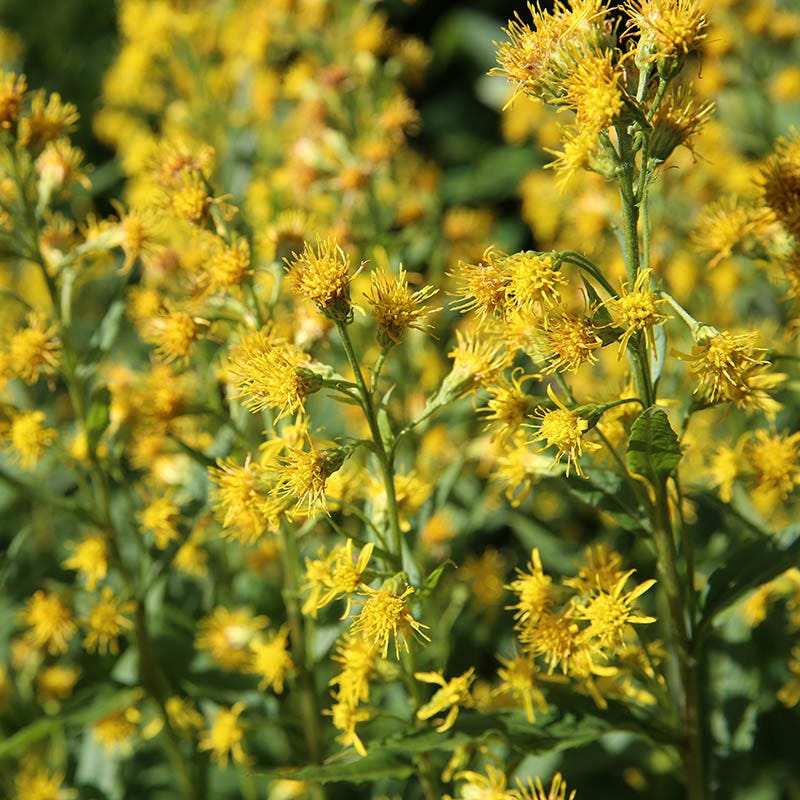
A wonderful native wildflower from Canada and the higher elevations of the Rocky Mountains, most often found above 7,000 feet, Rocky Mountain Goldenrod (Solidago multiradiata) has a different look than is typical of the genus. The flower clusters are rounded with relatively large individual yellow flowers, not the typical long, nodding spikes of tiny yellow flowers. Long after flowers have faded, fuzzy seeds persist, adding fall and winter interest. Its native range includes the alpine and subalpine climates of mountain ranges in Alaska, most of Canada, and the Western US, including Arizona, New Mexico, and California. Also called Alpine Goldenrod, Rocky Mountain Goldenrod should be grown in the Western US where it will enjoy cooler summer nights, as it will suffer from heat and hot, muggy nights in the Eastern US. Like all Goldenrods, this is an essential nectar plant for pollinating insects and food plant for other beneficial insects. Recommended companion plants include Corsican Perennial Pansy (Viola Corsica), Coral Canyon Twinspur (Diascia integerrima), and Festuca grass (Festuca).
A wonderful native wildflower from Canada and the higher elevations of the Rocky Mountains, most often found above 7,000 feet, Rocky Mountain Goldenrod (Solidago multiradiata) has a different look than is typical of the genus. The flower clusters are rounded with relatively large individual yellow flowers, not the typical long, nodding spikes of tiny yellow flowers. Long after flowers have faded, fuzzy seeds persist, adding fall and winter interest. Its native range includes the alpine and subalpine climates of mountain ranges in Alaska, most of Canada, and the Western US, including Arizona, New Mexico, and California. Also called Alpine Goldenrod, Rocky Mountain Goldenrod should be grown in the Western US where it will enjoy cooler summer nights, as it will suffer from heat and hot, muggy nights in the Eastern US. Like all Goldenrods, this is an essential nectar plant for pollinating insects and food plant for other beneficial insects. Recommended companion plants include Corsican Perennial Pansy (Viola Corsica), Coral Canyon Twinspur (Diascia integerrima), and Festuca grass (Festuca).
Original: $11.99
-65%$11.99
$4.20Description
A wonderful native wildflower from Canada and the higher elevations of the Rocky Mountains, most often found above 7,000 feet, Rocky Mountain Goldenrod (Solidago multiradiata) has a different look than is typical of the genus. The flower clusters are rounded with relatively large individual yellow flowers, not the typical long, nodding spikes of tiny yellow flowers. Long after flowers have faded, fuzzy seeds persist, adding fall and winter interest. Its native range includes the alpine and subalpine climates of mountain ranges in Alaska, most of Canada, and the Western US, including Arizona, New Mexico, and California. Also called Alpine Goldenrod, Rocky Mountain Goldenrod should be grown in the Western US where it will enjoy cooler summer nights, as it will suffer from heat and hot, muggy nights in the Eastern US. Like all Goldenrods, this is an essential nectar plant for pollinating insects and food plant for other beneficial insects. Recommended companion plants include Corsican Perennial Pansy (Viola Corsica), Coral Canyon Twinspur (Diascia integerrima), and Festuca grass (Festuca).