Giant Sacaton Grass
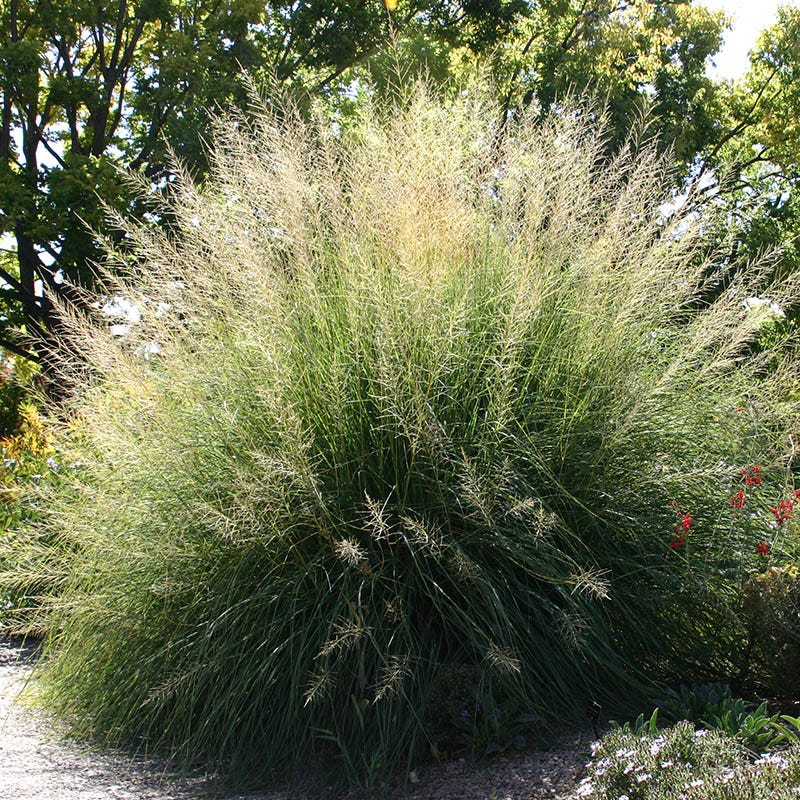
Giant Sacaton Grass (Sporobolus wrightii) is a large, attractive, and highly adaptable native grass ideal for low-water landscapes. Its tall plumes easily reach 5 feet wide and 7 feet tall, so plant where it will have room to grow. Giant Sacaton is a good solution for erosion control or planting on a slope, and an excellent low-water native alternative for non-native, water-loving grasses like Miscanthus or Pampas Grass. This Southwest native is found primarily in semi-desert habitats at elevations up to 7500 ft, but also occasionally in clay flats, floodplains, desert lakes, or marshes with moderate moisture. It is drought, salt, and alkaline tolerant, and can also be used in rain gardens. It will perform best with a couple of deep waterings through the driest months. As with all ornamental grasses, leave seed heads standing for winter interest and bird forage; the inflorescence can also be used in dried flower arrangements. In spring, after you see green growth emerging, cut plants back to 1-2 feet above the ground. In mild climates, Giant Sacaton may maintain some green foliage year-round. Plant Giant Sacaton with Agastache cana, Agastache rupestris, and Salvia greggii.
Giant Sacaton Grass (Sporobolus wrightii) is a large, attractive, and highly adaptable native grass ideal for low-water landscapes. Its tall plumes easily reach 5 feet wide and 7 feet tall, so plant where it will have room to grow. Giant Sacaton is a good solution for erosion control or planting on a slope, and an excellent low-water native alternative for non-native, water-loving grasses like Miscanthus or Pampas Grass. This Southwest native is found primarily in semi-desert habitats at elevations up to 7500 ft, but also occasionally in clay flats, floodplains, desert lakes, or marshes with moderate moisture. It is drought, salt, and alkaline tolerant, and can also be used in rain gardens. It will perform best with a couple of deep waterings through the driest months. As with all ornamental grasses, leave seed heads standing for winter interest and bird forage; the inflorescence can also be used in dried flower arrangements. In spring, after you see green growth emerging, cut plants back to 1-2 feet above the ground. In mild climates, Giant Sacaton may maintain some green foliage year-round. Plant Giant Sacaton with Agastache cana, Agastache rupestris, and Salvia greggii.
Description
Giant Sacaton Grass (Sporobolus wrightii) is a large, attractive, and highly adaptable native grass ideal for low-water landscapes. Its tall plumes easily reach 5 feet wide and 7 feet tall, so plant where it will have room to grow. Giant Sacaton is a good solution for erosion control or planting on a slope, and an excellent low-water native alternative for non-native, water-loving grasses like Miscanthus or Pampas Grass. This Southwest native is found primarily in semi-desert habitats at elevations up to 7500 ft, but also occasionally in clay flats, floodplains, desert lakes, or marshes with moderate moisture. It is drought, salt, and alkaline tolerant, and can also be used in rain gardens. It will perform best with a couple of deep waterings through the driest months. As with all ornamental grasses, leave seed heads standing for winter interest and bird forage; the inflorescence can also be used in dried flower arrangements. In spring, after you see green growth emerging, cut plants back to 1-2 feet above the ground. In mild climates, Giant Sacaton may maintain some green foliage year-round. Plant Giant Sacaton with Agastache cana, Agastache rupestris, and Salvia greggii.