🚚 Free Worldwide Shipping on All Orders!Shop Now

1 / 3
Utah Sweet-vetch
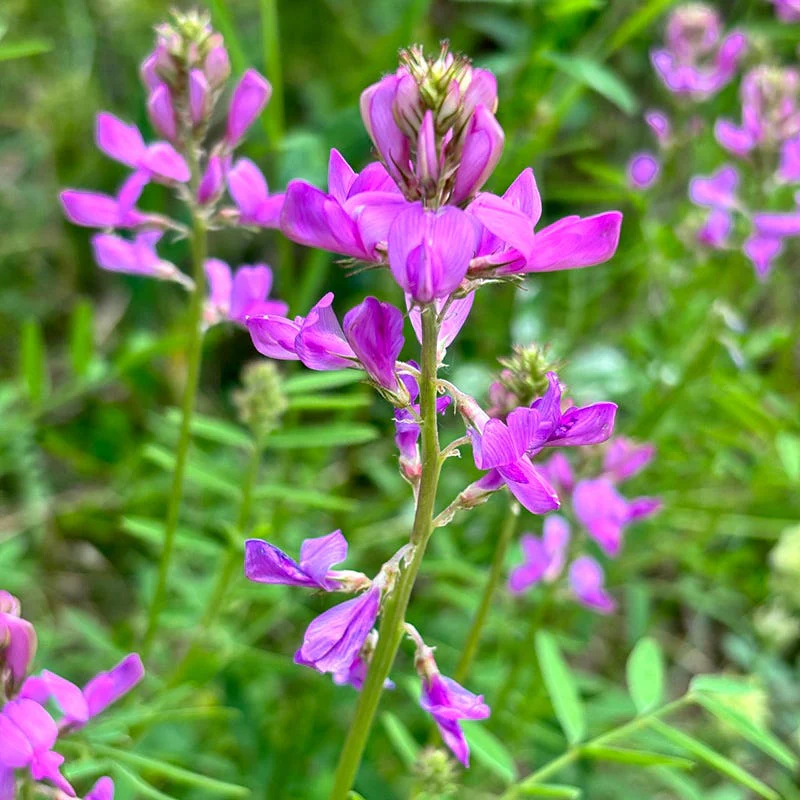
Hedysarum boreale (Utah Sweet-vetch) is a well-loved member of the Fabaceae family that has adapted to a wide range of North American habitats. It serves several important roles within its ecosystem. Its deep root structure prevents soil erosion in challenging northern climates. Plus, this legume has the remarkable ability to fix atmospheric nitrogen, enriching your soil and contributing to greater biodiversity in your yard.
Hedysarum boreale thrives in cool temperate climates in well-drained, loamy or sandy soils. It is commonly found along river edges and in disturbed areas between 4,000-8,000 ft elevation – a testament to its adaptability to various growing conditions. It is notable as one of the few non-toxic legumes common in Sagebrush Steppe country. Historically, indigenous peoples have used Utah Sweet-vetch as a nutritious protein-rich food source.
Hedysarum boreale thrives in cool temperate climates in well-drained, loamy or sandy soils. It is commonly found along river edges and in disturbed areas between 4,000-8,000 ft elevation – a testament to its adaptability to various growing conditions. It is notable as one of the few non-toxic legumes common in Sagebrush Steppe country. Historically, indigenous peoples have used Utah Sweet-vetch as a nutritious protein-rich food source.
Hedysarum boreale (Utah Sweet-vetch) is a well-loved member of the Fabaceae family that has adapted to a wide range of North American habitats. It serves several important roles within its ecosystem. Its deep root structure prevents soil erosion in challenging northern climates. Plus, this legume has the remarkable ability to fix atmospheric nitrogen, enriching your soil and contributing to greater biodiversity in your yard.
Hedysarum boreale thrives in cool temperate climates in well-drained, loamy or sandy soils. It is commonly found along river edges and in disturbed areas between 4,000-8,000 ft elevation – a testament to its adaptability to various growing conditions. It is notable as one of the few non-toxic legumes common in Sagebrush Steppe country. Historically, indigenous peoples have used Utah Sweet-vetch as a nutritious protein-rich food source.
Hedysarum boreale thrives in cool temperate climates in well-drained, loamy or sandy soils. It is commonly found along river edges and in disturbed areas between 4,000-8,000 ft elevation – a testament to its adaptability to various growing conditions. It is notable as one of the few non-toxic legumes common in Sagebrush Steppe country. Historically, indigenous peoples have used Utah Sweet-vetch as a nutritious protein-rich food source.
$15.99
Utah Sweet-vetch—
$15.99
Description
Hedysarum boreale (Utah Sweet-vetch) is a well-loved member of the Fabaceae family that has adapted to a wide range of North American habitats. It serves several important roles within its ecosystem. Its deep root structure prevents soil erosion in challenging northern climates. Plus, this legume has the remarkable ability to fix atmospheric nitrogen, enriching your soil and contributing to greater biodiversity in your yard.
Hedysarum boreale thrives in cool temperate climates in well-drained, loamy or sandy soils. It is commonly found along river edges and in disturbed areas between 4,000-8,000 ft elevation – a testament to its adaptability to various growing conditions. It is notable as one of the few non-toxic legumes common in Sagebrush Steppe country. Historically, indigenous peoples have used Utah Sweet-vetch as a nutritious protein-rich food source.
Hedysarum boreale thrives in cool temperate climates in well-drained, loamy or sandy soils. It is commonly found along river edges and in disturbed areas between 4,000-8,000 ft elevation – a testament to its adaptability to various growing conditions. It is notable as one of the few non-toxic legumes common in Sagebrush Steppe country. Historically, indigenous peoples have used Utah Sweet-vetch as a nutritious protein-rich food source.