🚚 Free Worldwide Shipping on All Orders!Shop Now

1 / 4
Winterfat
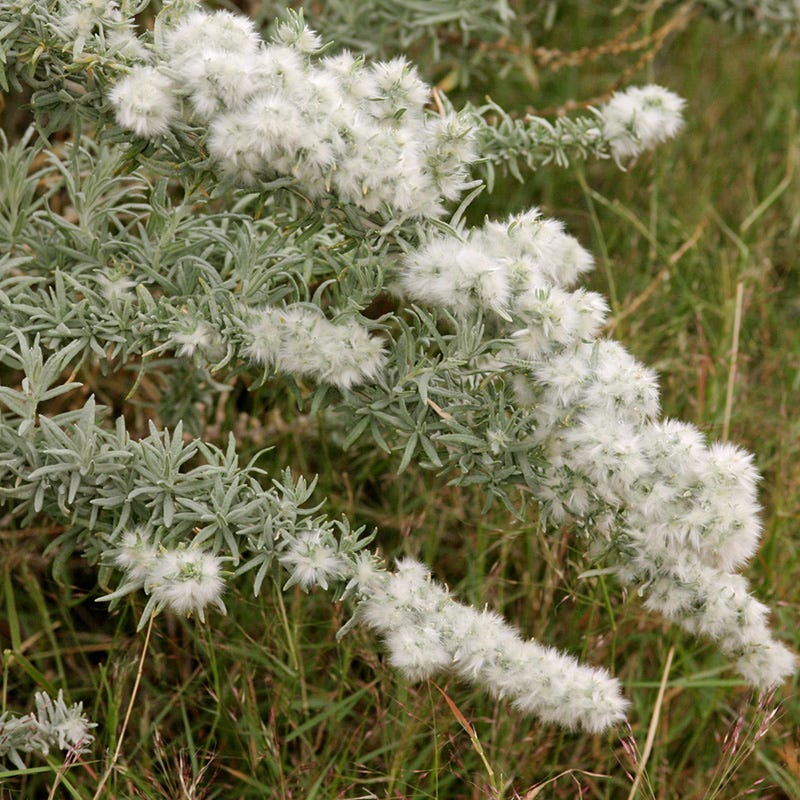
Krascheninnikovia lanata (Winterfat) is a rarely available evergreen groundcover shrub native to Western North America. Slender, erect branches emerge from a woody base, reaching one to three feet tall and cover themselves with plumes of fruiting, fluffy, cotton-candy-like seedheads. Striking blue-green foliage remains on the plant all season, making this a perfect choice to add visual interest in xeric groundcover and border plantings. Mounding foliage provides groundcover and complements colorful perennials.
Winterfat was widely used by Native American tribes as a food source and for medicinal purposes. It also provides essential winter forage for sheep, pronghorn elk, mule deer, and numerous small mammals and birds.
Krascheninnikovia lanata thrives in full sun areas that receive less than 16 inches of annual precipitation. It prefers well-draining alkaline soils like those found in the Great Basin, Central Valley, Great Plains and Mojave Desert regions of the American West. Prune back in early spring to maintain a bushy shape.
Winterfat was widely used by Native American tribes as a food source and for medicinal purposes. It also provides essential winter forage for sheep, pronghorn elk, mule deer, and numerous small mammals and birds.
Krascheninnikovia lanata thrives in full sun areas that receive less than 16 inches of annual precipitation. It prefers well-draining alkaline soils like those found in the Great Basin, Central Valley, Great Plains and Mojave Desert regions of the American West. Prune back in early spring to maintain a bushy shape.
Krascheninnikovia lanata (Winterfat) is a rarely available evergreen groundcover shrub native to Western North America. Slender, erect branches emerge from a woody base, reaching one to three feet tall and cover themselves with plumes of fruiting, fluffy, cotton-candy-like seedheads. Striking blue-green foliage remains on the plant all season, making this a perfect choice to add visual interest in xeric groundcover and border plantings. Mounding foliage provides groundcover and complements colorful perennials.
Winterfat was widely used by Native American tribes as a food source and for medicinal purposes. It also provides essential winter forage for sheep, pronghorn elk, mule deer, and numerous small mammals and birds.
Krascheninnikovia lanata thrives in full sun areas that receive less than 16 inches of annual precipitation. It prefers well-draining alkaline soils like those found in the Great Basin, Central Valley, Great Plains and Mojave Desert regions of the American West. Prune back in early spring to maintain a bushy shape.
Winterfat was widely used by Native American tribes as a food source and for medicinal purposes. It also provides essential winter forage for sheep, pronghorn elk, mule deer, and numerous small mammals and birds.
Krascheninnikovia lanata thrives in full sun areas that receive less than 16 inches of annual precipitation. It prefers well-draining alkaline soils like those found in the Great Basin, Central Valley, Great Plains and Mojave Desert regions of the American West. Prune back in early spring to maintain a bushy shape.
$5.98
Original: $17.09
-65%Winterfat—
$17.09
$5.98Description
Krascheninnikovia lanata (Winterfat) is a rarely available evergreen groundcover shrub native to Western North America. Slender, erect branches emerge from a woody base, reaching one to three feet tall and cover themselves with plumes of fruiting, fluffy, cotton-candy-like seedheads. Striking blue-green foliage remains on the plant all season, making this a perfect choice to add visual interest in xeric groundcover and border plantings. Mounding foliage provides groundcover and complements colorful perennials.
Winterfat was widely used by Native American tribes as a food source and for medicinal purposes. It also provides essential winter forage for sheep, pronghorn elk, mule deer, and numerous small mammals and birds.
Krascheninnikovia lanata thrives in full sun areas that receive less than 16 inches of annual precipitation. It prefers well-draining alkaline soils like those found in the Great Basin, Central Valley, Great Plains and Mojave Desert regions of the American West. Prune back in early spring to maintain a bushy shape.
Winterfat was widely used by Native American tribes as a food source and for medicinal purposes. It also provides essential winter forage for sheep, pronghorn elk, mule deer, and numerous small mammals and birds.
Krascheninnikovia lanata thrives in full sun areas that receive less than 16 inches of annual precipitation. It prefers well-draining alkaline soils like those found in the Great Basin, Central Valley, Great Plains and Mojave Desert regions of the American West. Prune back in early spring to maintain a bushy shape.