Desert Bluebells Seeds (Phacelia)
(8-20" tall) In its native habitat, Desert Bluebells
sprout blooms seemingly overnight after a late spring rain quenches their
thirst. Soon the plants are covered with flowers in one of the richest,
clearest blues you'll find anywhere in nature. True blue is a much sought after
flower color in home gardens, but is usually found in fussier species or those
that have been highly hybridized. An important spring food source for bees and
other pollinators, the plants will continue producing nectar-rich flowers for
an extended bloom time. Adaptable to a range of soils types, Desert Bluebell
readily self-sows and multiplies, forming a colony of plants that will grace
your garden each spring with a carpet of beguiling blue. Other common names
include Desert Bells, Desert Canterbury Bells, and California Bluebells.
(8-20" tall) In its native habitat, Desert Bluebells
sprout blooms seemingly overnight after a late spring rain quenches their
thirst. Soon the plants are covered with flowers in one of the richest,
clearest blues you'll find anywhere in nature. True blue is a much sought after
flower color in home gardens, but is usually found in fussier species or those
that have been highly hybridized. An important spring food source for bees and
other pollinators, the plants will continue producing nectar-rich flowers for
an extended bloom time. Adaptable to a range of soils types, Desert Bluebell
readily self-sows and multiplies, forming a colony of plants that will grace
your garden each spring with a carpet of beguiling blue. Other common names
include Desert Bells, Desert Canterbury Bells, and California Bluebells.
Description
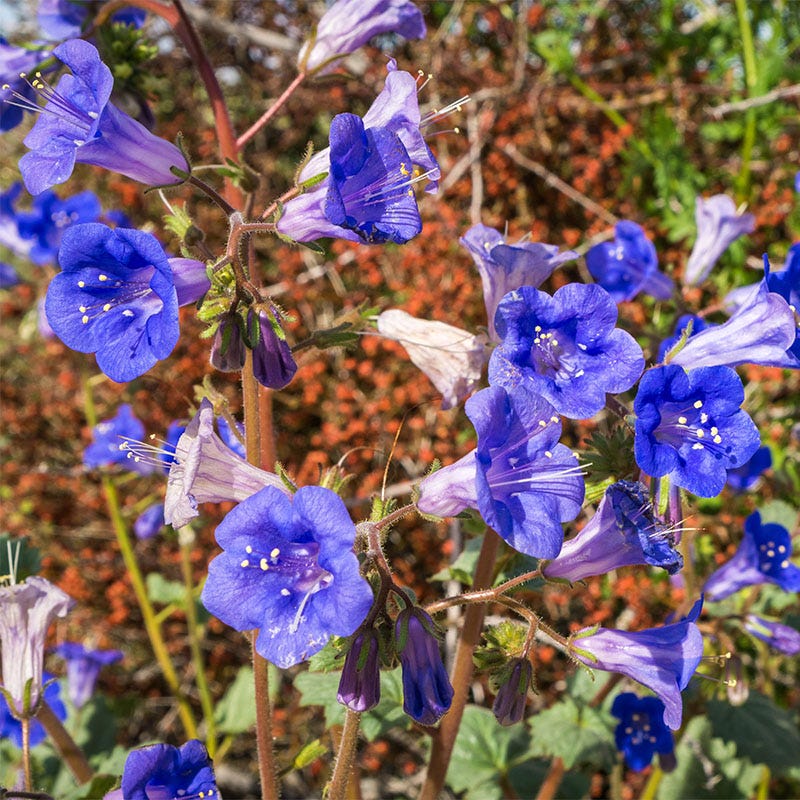
(8-20" tall) In its native habitat, Desert Bluebells
sprout blooms seemingly overnight after a late spring rain quenches their
thirst. Soon the plants are covered with flowers in one of the richest,
clearest blues you'll find anywhere in nature. True blue is a much sought after
flower color in home gardens, but is usually found in fussier species or those
that have been highly hybridized. An important spring food source for bees and
other pollinators, the plants will continue producing nectar-rich flowers for
an extended bloom time. Adaptable to a range of soils types, Desert Bluebell
readily self-sows and multiplies, forming a colony of plants that will grace
your garden each spring with a carpet of beguiling blue. Other common names
include Desert Bells, Desert Canterbury Bells, and California Bluebells.