Mule's Ears Seeds (Wyethia)
(12-32" tall) Pluck one of the bright green leaves
and imagine it perched on a mule's head, and you'll quickly see how the Mule's
Ears plant got its name. What the name doesn't describe is how bright and
cheerful the sunflower-like blossoms are! Mule's Ears blooms from late spring
to early summer with large yellow flowers that attract butterflies, bees, and
birds. The plant thrives in full sun and adapts to most soil types, as long as
they're well-drained. In its native habitat on open hillsides and meadows in
the Mountain West, Mule's Ears forms dense stands that not only bloom
beautifully, but also provide cover for birds and small mammals. The plant's
extensive root system holds soil in place, helping prevent erosion. Grow a
carpet of sunshine!
(12-32" tall) Pluck one of the bright green leaves
and imagine it perched on a mule's head, and you'll quickly see how the Mule's
Ears plant got its name. What the name doesn't describe is how bright and
cheerful the sunflower-like blossoms are! Mule's Ears blooms from late spring
to early summer with large yellow flowers that attract butterflies, bees, and
birds. The plant thrives in full sun and adapts to most soil types, as long as
they're well-drained. In its native habitat on open hillsides and meadows in
the Mountain West, Mule's Ears forms dense stands that not only bloom
beautifully, but also provide cover for birds and small mammals. The plant's
extensive root system holds soil in place, helping prevent erosion. Grow a
carpet of sunshine!
Original: $4.99
-65%$4.99
$1.75Description
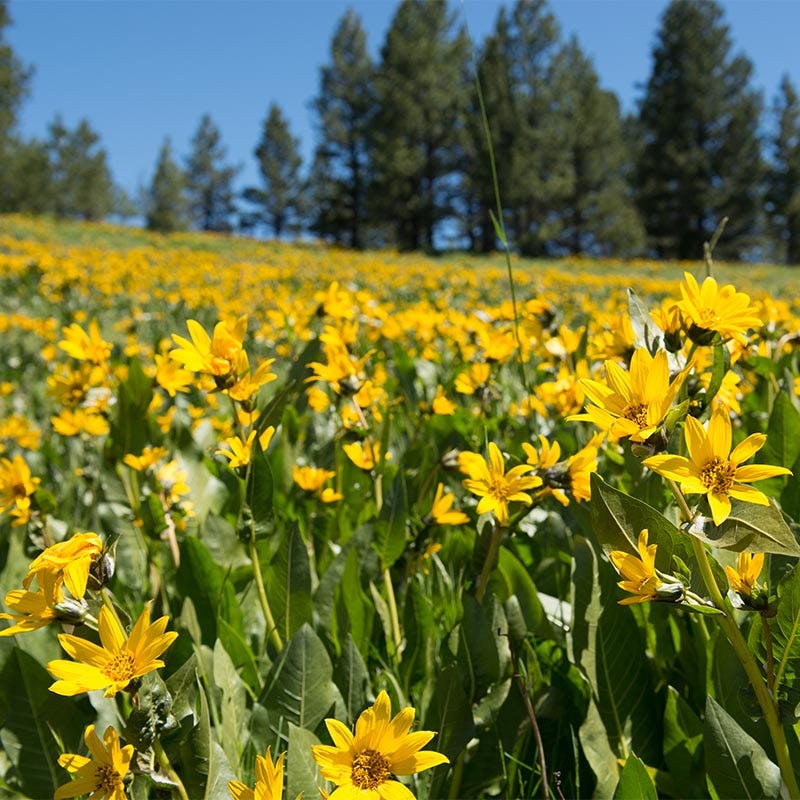
(12-32" tall) Pluck one of the bright green leaves
and imagine it perched on a mule's head, and you'll quickly see how the Mule's
Ears plant got its name. What the name doesn't describe is how bright and
cheerful the sunflower-like blossoms are! Mule's Ears blooms from late spring
to early summer with large yellow flowers that attract butterflies, bees, and
birds. The plant thrives in full sun and adapts to most soil types, as long as
they're well-drained. In its native habitat on open hillsides and meadows in
the Mountain West, Mule's Ears forms dense stands that not only bloom
beautifully, but also provide cover for birds and small mammals. The plant's
extensive root system holds soil in place, helping prevent erosion. Grow a
carpet of sunshine!