Barbary Ragwort
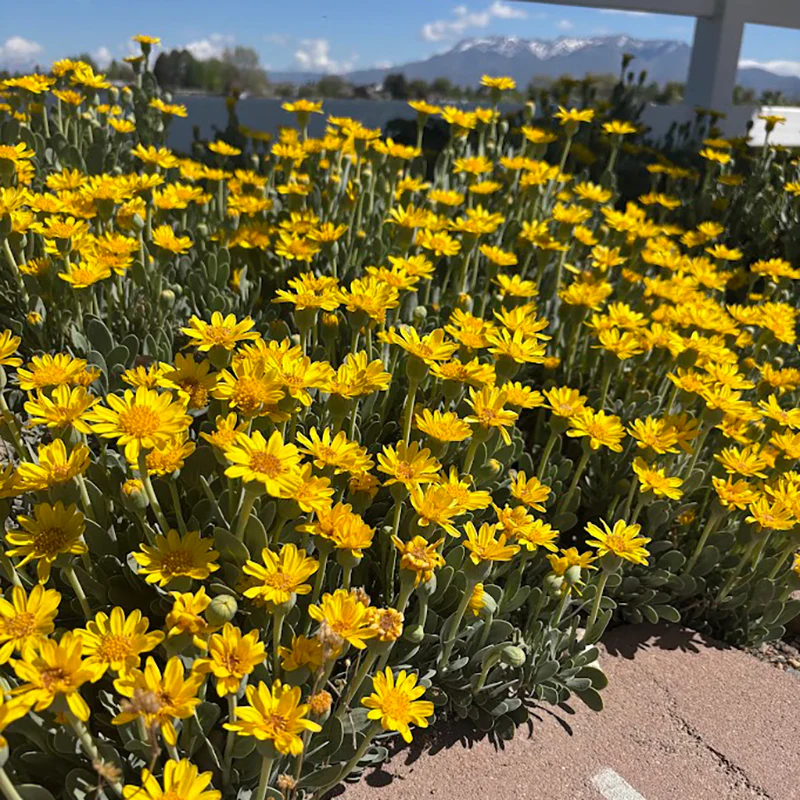
Barbary Ragwort, a fantastically strange succulent, was previously sold under the name Othonna, a name which seasoned gardeners may recognize. Bright yellow, daisy-like flowers are the calling card of this surprisingly cold hardy African plant. Even out of bloom the plant is eye-catching, with waxy, blueish green, oblong leaves. Mature plants can become substantial and take on a mounded form that complements their leaf architecture. To maximize cold-hardiness, taper off watering to these plants as fall nights grow cool and grow them with a gravel mulch on a south-facing berm. A spreading habit, low growth, and penchant for dry sites make this a good plant for erosion management, crevice gardens, and rock gardens.
Barbary Ragwort, a fantastically strange succulent, was previously sold under the name Othonna, a name which seasoned gardeners may recognize. Bright yellow, daisy-like flowers are the calling card of this surprisingly cold hardy African plant. Even out of bloom the plant is eye-catching, with waxy, blueish green, oblong leaves. Mature plants can become substantial and take on a mounded form that complements their leaf architecture. To maximize cold-hardiness, taper off watering to these plants as fall nights grow cool and grow them with a gravel mulch on a south-facing berm. A spreading habit, low growth, and penchant for dry sites make this a good plant for erosion management, crevice gardens, and rock gardens.
Original: $13.59
-65%$13.59
$4.76Description
Barbary Ragwort, a fantastically strange succulent, was previously sold under the name Othonna, a name which seasoned gardeners may recognize. Bright yellow, daisy-like flowers are the calling card of this surprisingly cold hardy African plant. Even out of bloom the plant is eye-catching, with waxy, blueish green, oblong leaves. Mature plants can become substantial and take on a mounded form that complements their leaf architecture. To maximize cold-hardiness, taper off watering to these plants as fall nights grow cool and grow them with a gravel mulch on a south-facing berm. A spreading habit, low growth, and penchant for dry sites make this a good plant for erosion management, crevice gardens, and rock gardens.